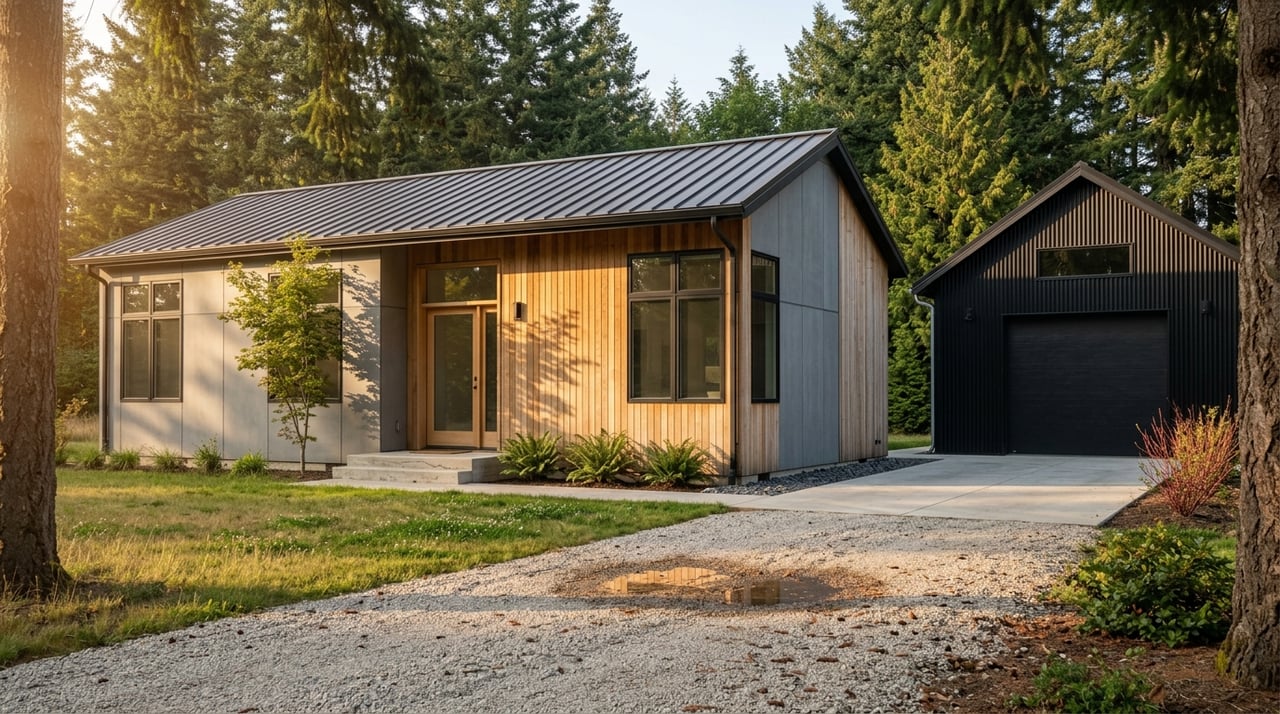
Buying Enumclaw Hobby Farm Properties With Confidence
June 25, 2026
June 25, 2026
Dreaming about a few acres in Enumclaw sounds simple until you realize you are not just buying a house. You are buying zoning, access, utilities, drainage, and the day-to-day reality of caring for land. If you want a property that truly fits a hobby-farm lifestyle, a smart search starts with the parcel itself. Let’s dive in.
Buying acreage in Enumclaw is different from buying a typical in-town home because the land can shape what you can actually do with the property. Before you get attached to a barn, pasture, or fenced field, you need to confirm which jurisdiction controls the parcel and what rules apply.
In this area, that can mean the City of Enumclaw or unincorporated King County. King County recommends starting with the parcel number, then checking the assessor record, Parcel Viewer, iMap, and the Districts and Development Conditions report. That process helps you verify zoning, parcel-specific conditions, and whether extra restrictions apply.
It is also important to treat online maps as a starting point, not final proof. King County’s Parcel Viewer says lot lines are approximate and not for legal use. That means a map can help you screen a property, but it should not be your final answer on boundary location or usable land area.
If you are shopping hobby farm and acreage properties in Enumclaw, the parcel number is one of your most useful tools. It helps you connect the listing to public records, zoning information, and development conditions that may not be obvious from photos or marketing remarks.
For parcels inside Enumclaw city limits, the city’s GIS resources can be especially helpful. The planning map includes zoning, future land use designations, and overlay districts. The city also provides critical-area maps that show floodplain and streams, wetlands, aquifer recharge areas, geologic hazard areas, and fish and wildlife conservation areas.
For unincorporated King County parcels, you should also review property-specific development conditions. Some parcels have P-suffix conditions that reduce the uses allowed by the base zoning. In practical terms, that means a property can look like a perfect mini-farm on paper but still have limits that affect how you use it.
Acreage alone does not guarantee hobby-farm use. In Enumclaw, land use is zone-based, and the city code explains that a use can be permitted, conditional, or not permitted depending on the parcel’s exact zone and related standards.
The city’s agriculture, mining, and forestry matrix includes uses such as keeping domestic animals, livestock, and poultry, along with farm-stand retail sales of produce and crops. Even so, you still need to verify the exact zone, footnotes, and related standards before assuming those uses are allowed.
King County also warns that agricultural activities and agricultural support services are usually only permitted in the Rural Area, Urban Reserve, Agriculture, and Forestry zones. That is an important reminder for buyers looking at larger lots. Just because a parcel has room does not mean the intended use is allowed.
If your goal includes animals, the physical setup of the property matters as much as the legal use. Enumclaw’s animal-control rules adopt King County animal-care and rabies regulations, and the city makes it unlawful for livestock or pets to run at large within city limits.
That makes fencing, gates, and containment features much more than convenience items. They are part of whether the property can function well for your day-to-day plans. When you tour acreage, pay close attention to fence condition, gate placement, and how easily animals could be separated or rotated.
Outbuildings deserve the same close look. In Enumclaw, one-story detached accessory structures up to 200 square feet are building-permit exempt for residential use, though setbacks still apply. King County has a similar 200-square-foot exemption for certain storage sheds accessory to a residence or agricultural use, except where critical areas or other special conditions apply.
A beautiful parcel can become much less practical if access is limited or expensive to improve. Driveways, road frontage, and right-of-way conditions all deserve careful review before you move forward.
King County says a right-of-way use permit is not required for direct driveway connections to a maintained county road, but the connection still has to meet county road standards. Additional work such as grading, private road intersections, or work in unopened or non-maintained right-of-way can trigger more permits.
For buyers, this matters because access improvements can affect both timing and budget. If you plan to bring in trailers, equipment, livestock, or construction materials, the current access should support that use or be realistically upgradeable.
One of the biggest differences with acreage shopping is utility research. Some Enumclaw-area properties can still be served by municipal systems. The city operates water, wastewater or sewer, stormwater, solid waste or garbage, and natural gas utilities, and its water system serves about 6,300 customers within the city and parts of unincorporated King County.
Many acreage homes, though, rely on private systems. That is why you should verify water and wastewater details early in the process, rather than waiting until the final stages of due diligence.
If the property has a private well, Washington Department of Health says well owners are responsible for testing their own water. The department recommends annual testing for coliform bacteria and nitrate, and it also suggests periodic arsenic testing.
Washington Ecology’s well-report and log viewer can help you search for construction details and other well records. On a rural property, that information can be just as important as the age of the roof or heating system.
If the property has septic, King County’s septic-record search tool can provide site designs, historic inspection reports, and as-builts. The county also notes that older systems may not have online records, so gaps in documentation are common on older rural homes.
Maintenance history matters, too. The Washington Department of Health recommends inspecting a gravity septic system at least once every three years, while other system types should be inspected yearly. A typical household tank is often pumped every three to five years.
Drainage can make a major difference in how usable a property feels through the year. Low spots, runoff patterns, and standing water may not stand out during a quick showing, especially in dry weather.
Enumclaw requires owners of private stormwater facilities to inspect and maintain them annually. The city ties those systems to the state stormwater manual to help reduce flooding and pollutant discharge. If a property has swales, detention features, or other drainage components, you will want to understand what upkeep they need.
Flood and critical-area review should also be part of every acreage search. King County floodplain maps show floodway, 100-year floodplain, 500-year floodplain, and levee-protected areas. For unincorporated parcels, a Critical Areas Designation can identify critical areas and buffers on a property and is valid for five years.
It is also wise to remember that not every hazard is visible on a map. King County’s property research worksheet notes that not all critical and hazard areas are mapped and that mapped information may need independent verification. In other words, maps are valuable, but they are not the whole story.
Acreage ownership often comes with more hands-on maintenance than buyers expect. If you want pasture, horses, gardens, or a small farm setup, the property needs to function well over time, not just look appealing at first glance.
King Conservation District highlights common management items such as stream-side fencing, gutters and downspouts, manure composting, pasture management and renovation, weed management, sacrifice areas, and cross-fencing or rotation. Those tasks can affect both your budget and your weekly routine.
For pasture-oriented properties, the district recommends inventorying soil type, forage, fence locations, water supply, grazing distribution, erosion, streams or ditches, brush and weeds, and feeding areas. That kind of review can help you decide whether the land supports your goals or needs significant work.
The condition of the soil matters, too. King Conservation District notes that intensive livestock use can compact soil and reduce productivity, while planned grazing can improve pasture condition, conserve water, and reduce erosion. If you are buying acreage for animals, the layout and current land condition are core parts of the property’s value.
When you are serious about a property, it helps to follow a clear process. Acreage purchases usually work best when you evaluate the home and the land at the same time.
Here is a practical checklist to use before removing contingencies:
King County specifically flags building changes, critical-area work, grading and fill thresholds, and septic-related approvals as common permit triggers. That is why the smartest acreage buyers think of the purchase as a property-and-site systems decision, not just a house decision.
A hobby farm or acreage purchase can be rewarding, but it usually involves more moving parts than a standard home search. You need to evaluate the parcel, the systems, the access, and the long-term fit for how you actually want to live.
That is where a detail-focused, locally informed approach makes a real difference. When you have the right guidance, you can move forward with clearer expectations, better questions, and fewer surprises after closing.
If you are exploring acreage or hobby-farm properties in and around Enumclaw, The Breckenridge Team can help you approach the search with a sharper eye for land use, property condition, and overall fit.
Our team has wide reaching connections that enable us to find off the market properties for our clients. Contact us today!